Dr. Ahmet Özyiğit was born in 1981 in Famagusta, Cyprus. He is the youngest of three children of Özgen and Dr. Savaş Özyiğit.
After completing his high school education at Türk Maarif College in 1998, he earned his bachelor's and master's degrees in economics in Kansas, United States. He then received his doctorate in the same field, actively participating in academic research and publishing various scientific articles.
Over time, Dr. Özyiğit turned to medical science and completed his medical education at the University of Nicosia Faculty of Medicine. In addition to his medical education, he earned a master's degree in Clinical Embryology at the University of Leeds, and then pursued postgraduate studies in Endocrinology at the University of South Wales.
Dr. Özyiğit, who shaped her academic and clinical career with a multidisciplinary perspective, continues her clinical studies particularly in the areas of weight management, metabolic health, and healthy aging. An active member of the American Academy of Anti-Aging Medicine, Dr. Özyiğit earned American Board certification as a specialist in Anti-Aging and Regenerative Medicine after completing a fellowship in longevity medicine. In her clinical practice, she offers her patients longevity-focused approaches, weight management programs, reproductive medicine applications for the elderly, and treatments to support brain function.

Dr. Ahmet Özyiğit
Wellness and Anti-aging Applications

Dr. Ahmet Özyiğit
Wellness and Anti-aging Applications
I want to age healthily. Where should I start?
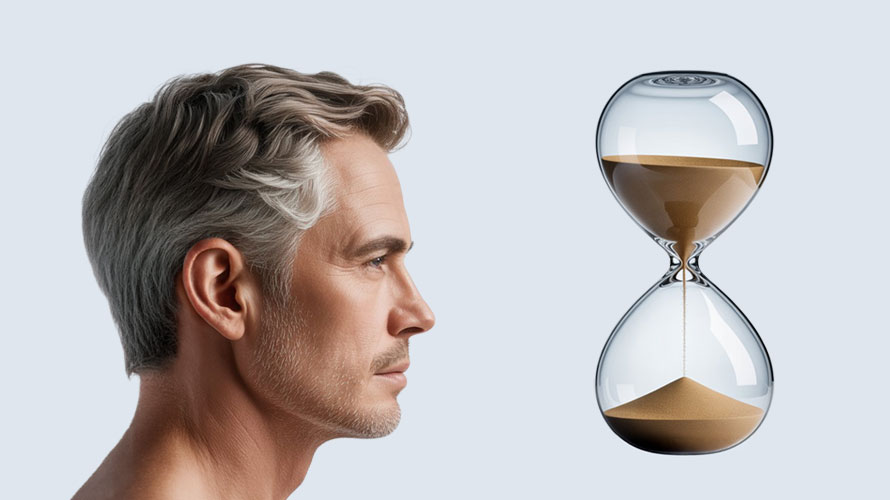
Most people, at some point in their lives, want to get their lives in order, make healthier decisions, and enter the future with a better health profile as they age. However, the realities of modern life often make this difficult. Work stress, financial worries, family responsibilities, irregular sleep, fast-paced lifestyles, and easily accessible processed foods can, without us realizing it, lead us to inactivity and unhealthy eating habits. Moreover, the constant messages we encounter on social media and the internet about "perfect diets," "flawless bodies," and "living without any cheat meals" can create unrealistic expectations in people.
One of the biggest mistakes made at this point is evaluating healthy living with an "all or nothing" mentality. People often believe they can eat perfectly, or when they can't maintain it, they completely lose control, thinking, "I've already messed it up anyway." However, the human metabolism is not such a black-and-white system. Scientific data clearly shows us that the most important factor determining health is not a single meal or a single indulgence, but the sum of long-term habits.
For example, there's a huge metabolic difference between occasionally eating a hamburger and consuming ultra-processed foods every day. Similarly, having a dessert on a weekend isn't the same as eating a high-sugar, refined carbohydrate diet daily. A consistently high-sugar, high-calorie diet accelerates processes like insulin resistance, chronic inflammation, high triglycerides, fatty liver disease, and vascular damage over time, while the impact of occasional indulgences is much more limited. Our bodies have a certain degree of metabolic flexibility and can tolerate minor damage. The problem arises when unhealthy behaviors become a lifestyle rather than an exception, and the small, gradual damages we inflict on our bodies reach serious levels that are no longer tolerable.
This is where the sustainable health approach begins. You don't have to be perfect. What matters is that your overall direction is right.
My own nutritional approach, which I try to implement in my life, is based on this. During the week, I try to eat as much protein and vegetables as possible. Unless it's a special day, a birthday, or an event, a large piece of salmon with boiled vegetables in olive oil and an avocado salad can be a very filling and metabolically supportive meal during the week. On another day, it could be a good quality red meat with vegetables and salad. On another day, it could be grilled chicken with eggs and agrelli. So, especially during the week, I try to completely avoid high glycemic index carbohydrates. This isn't because these types of carbohydrates are necessarily "bad"; it's because constantly high glucose and insulin fluctuations can damage metabolic health in the long term. However, this doesn't mean you should never eat pizza or sweets for the rest of your life. From a psychological perspective, it's very difficult for a system that isn't sustainable to continue in the long term. But we can make even these less healthy foods 'less unhealthy'. For example, when we want to eat pizza, consuming some chicken salad before the pizza will both meet our vegetable and protein needs and help reduce the sudden sugar and insulin spikes that pizza might cause. As a result, we'll end up consuming less pizza.
The same is true for exercise. Many people never start because they perceive exercise as daunting. One phrase I often hear from my patients is: "I'm too tired to exercise when I get home in the evening." As a result, people choose to do nothing because they think they won't be able to do it well enough. However, from a physiological perspective, even one minute of exercise is far more valuable than zero minutes.
In recent years, the approach known as 'exercise snacks' has gained attention. This approach involves short but intense bursts of activity spread throughout the day, instead of long and strenuous workout sessions. In particular, a study by Martin Gibala and his team at McMaster University, published in the journal Diabetologia in 2014, showed that short bursts of intense exercise before meals were more effective in controlling blood sugar than a single 30-minute burst of moderate-intensity exercise. Participants who performed approximately one minute of intense exercise three times a day showed a significant improvement in 24-hour glucose control. These one-minute bursts of intense exercise can consist of running, squats, or weightlifting – exercises that tire the participant in just one minute.
Similarly, studies have shown that prolonged sitting slows metabolism throughout the day; however, interspersed short walks, stair climbing, or brief periods of intense exercise reduce insulin levels and post-meal blood sugar spikes. Particularly for individuals with sedentary desk jobs, it has been observed that short bursts of exercise throughout the day are metabolically more beneficial than remaining inactive all day and then exercising once in the evening.
***
The basic principle here is: healthy aging isn't about being perfect. The goal is to be a little better than you were yesterday, to be a little more active, to make a little more conscious choices. Because health is often shaped not by dramatic changes, but by the accumulation of small but sustainable habits over the years.
Technology can also have beneficial aspects in this regard. Wearable devices, in particular, such as the Apple Watch, WHOOP, or Hume Health, can help us track parameters like activity level, sleep quality, heart rate, HRV, and daily movement amount. The human mind is more inclined to improve what it can measure. Seeing daily step count, sleep duration, or activity level numerically makes behavioral change easier for most people. This is because things that are not tracked tend to be overlooked over time.
In short, it's not about being perfect; it's about being able to keep going. Taking a few shortcuts, sometimes lacking motivation, or deviating from the plan on certain days is part of being human. The important thing is being able to continue on the path the next day instead of giving up completely at that point. In the long run, what determines health isn't a single bad day, but mostly the small but right decisions we make.
Dr. Ahmet Özyiğit MD, ABAARM
Anti-Aging and Regenerative Medicine Specialist